
FAQ: What weaknesses and disadvantages can leather have?
Taking the different types of leather into account, this question can be answered quite broadly. But for me, the biggest weakness of leather in general is its potential to dry out, which is why you should treat leather in your life with a nourishing care cream from time to time. For leather shoes, shoe cream typically serves this function.
What are the weaknesses of leather?
When I see this question, I think it probably refers to leather in its purest form. After all, you can reduce some of leather’s weaknesses by sealing the leather surface with a layer. This makes the leather surface more resistant to scratches and dirt, but then you no longer have pure leather, rather a leather-plastic mixture.
So I am referring here to pure leather without a protective layer on the surface. It can develop scratches, cracks, and stains. However, you can treat all of these quite well when they are minor or light. Very light scratches in particular quickly disappear visually after treatment with shoe cream in a matching color or a good leather cream.
Stains in leather
Vegetable-tanned leather in particular is extremely sensitive to all kinds of liquids: Both sweat and rain can leave marks in the form of dark stains. This does not have to be bad when it comes to rainwater: You can still improve and even out the appearance afterward. But sweat has a different effect than rainwater and makes the leather worse and more prone to cracks.
You can reduce this absorbent quality of leather by caring for it with a leather cream. The leather absorbs beneficial oils from the leather cream and is therefore less thirsty for other liquids afterward. In addition, chrome-tanned leather is at least better in this respect because it is somewhat more resistant to liquids.
What is really bad, however, is oil or grease stains on the upper leather - coming from concentrated oil or grease.
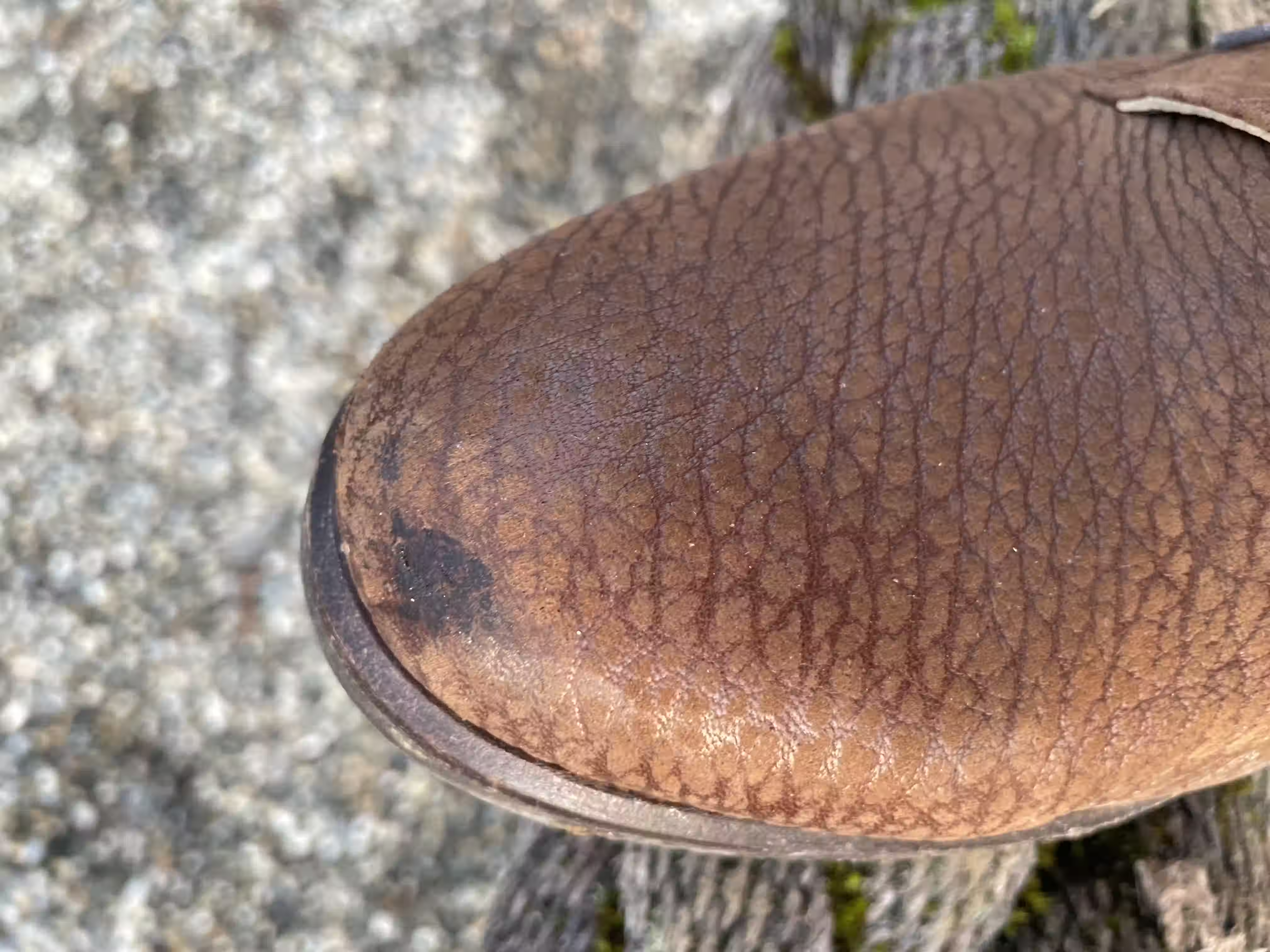
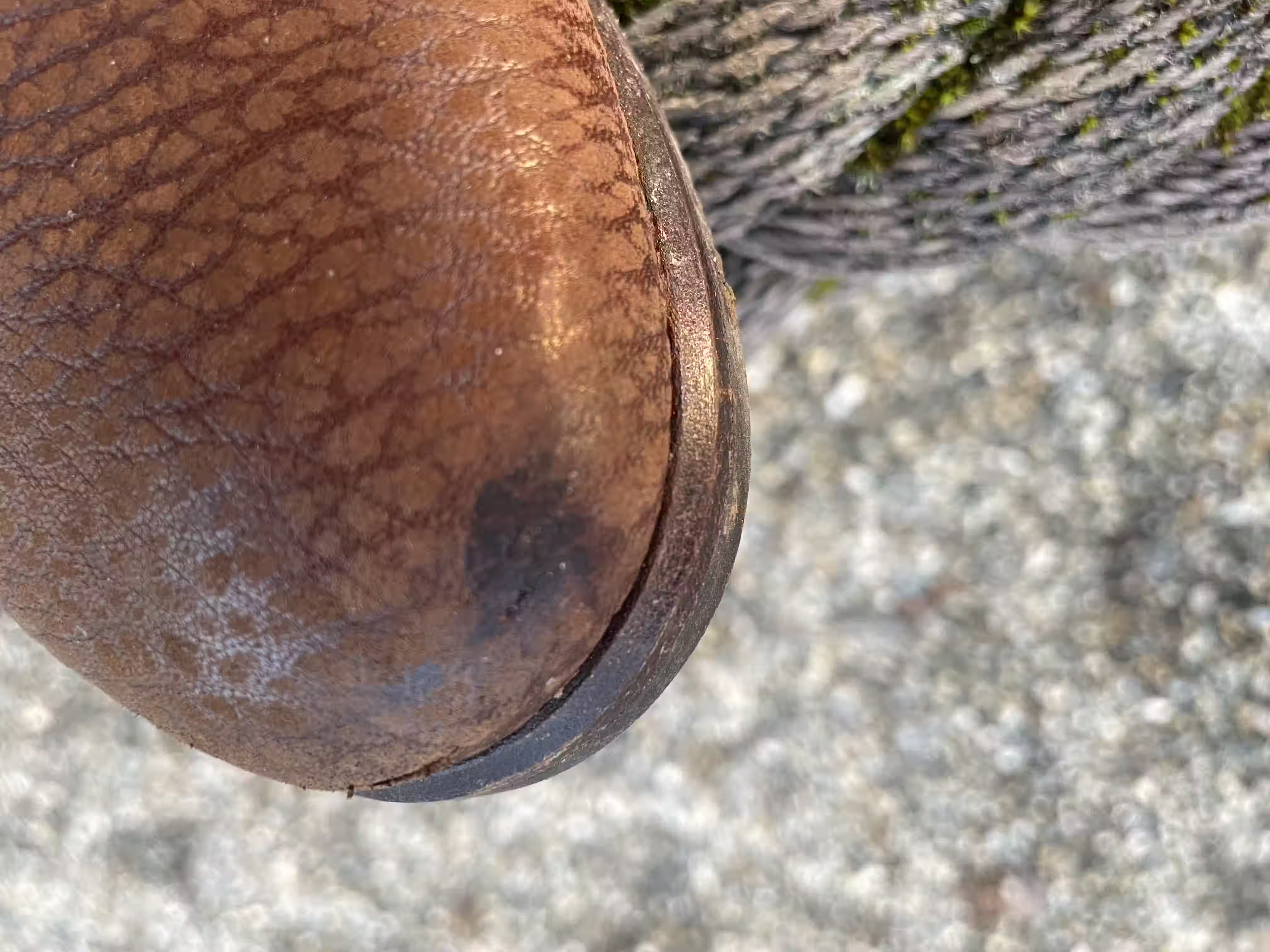
The oil or grease has already soaked into the leather here, and you can only use a special powder or plan for a complete shoe cleaning.
Cracks in leather
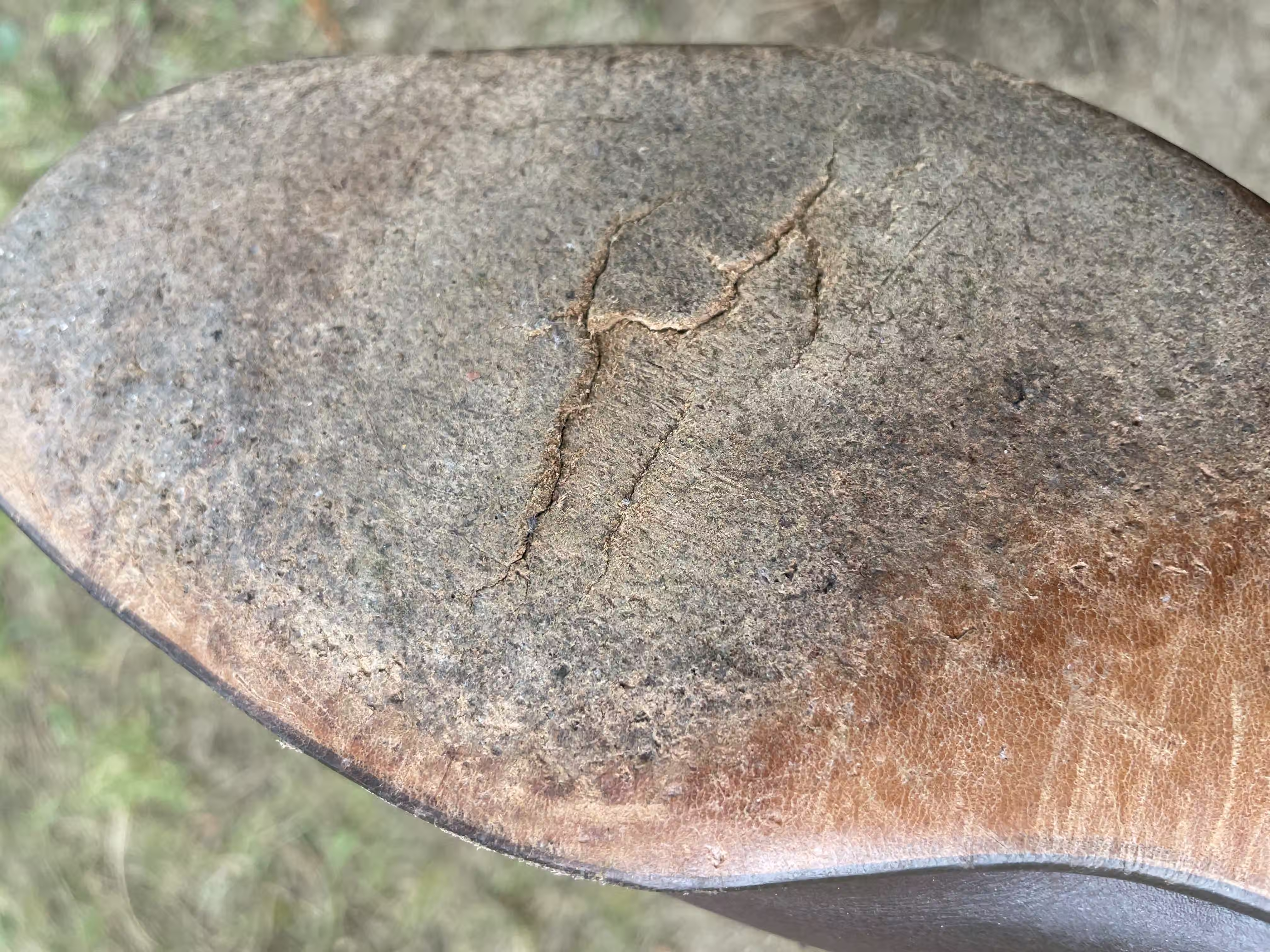
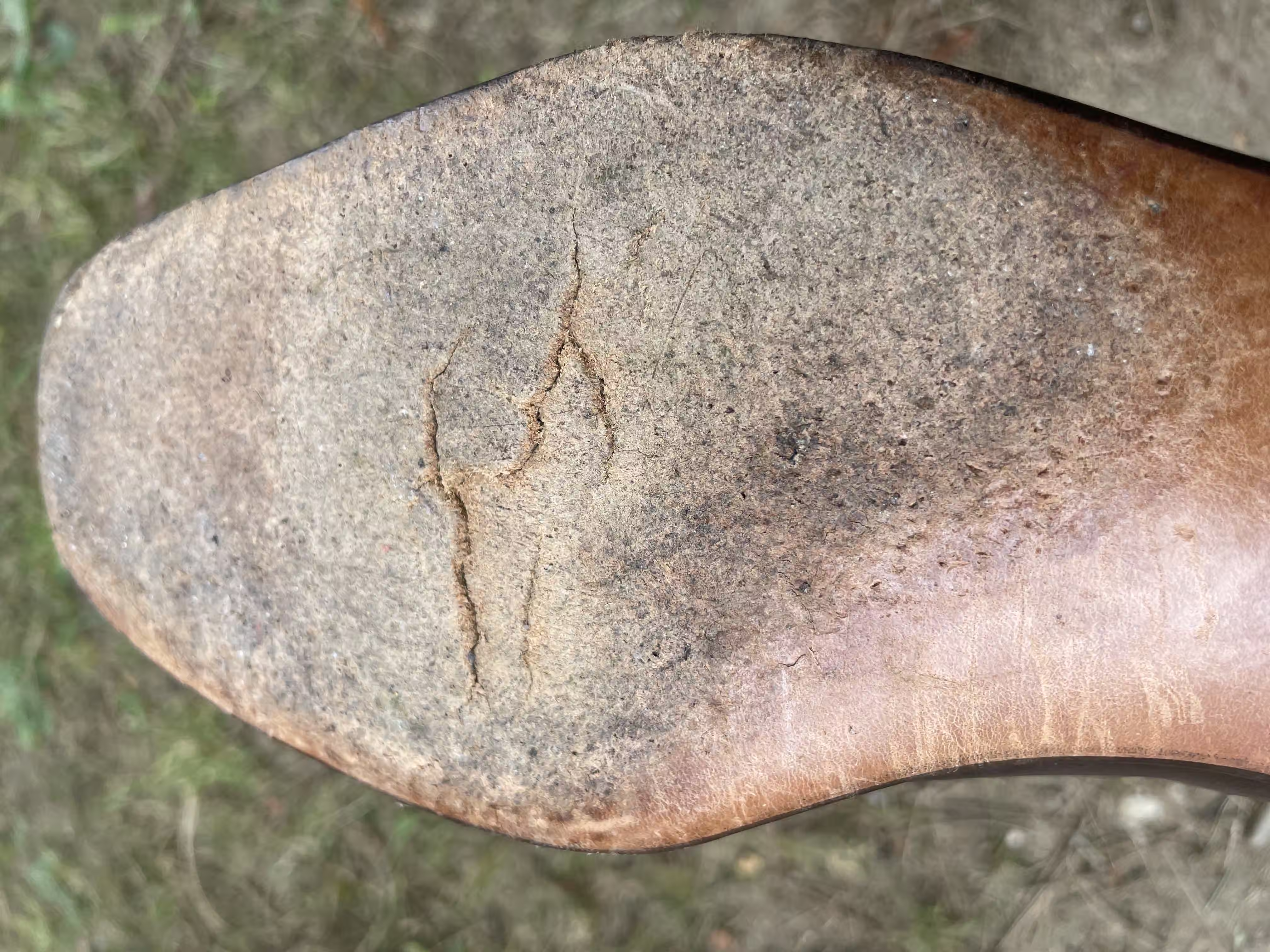
Cracks can easily develop in particularly dry leather if it has not been cared for properly, or at all. There are general leather care products that keep leather pleasantly firm and supple, for example by using oils. You can also use such products for shoes, although shoe cream is mainly used for this purpose and typically takes on this leather-care task.
You should know that wax does not have a truly nourishing effect; it is really only there for shine. You can also buy wax separately and apply it after shoe care to achieve more shine. However, an overly thick layer of wax seals off the leather and makes it unreceptive to further shoe care. If you do not remove such a thick wax layer during the next major shoe care session after some time, cracks can gradually form, especially in the crease area.
This is also a kind of weakness of leather in the case of too much wax, and this weakness mainly affects shoes. Ultimately, it simply comes down to the fact that leather can dry out over time and is then more susceptible to cracks in this dry state.
Weaknesses specific to chrome-tanned leather
Chrome-tanned leather has the characteristic that poor tanning can produce a carcinogenic component. This harmful substance may be present in the leather directly after poor tanning. However, it can also develop in the leather only years later. This is particularly tricky because the leather has long since passed quality checks by then.
In my view, this is a bigger problem because chrome-tanned leather is the dominant leather on the market due to its extremely short tanning time. However, not every chrome-tanned leather has this bad characteristic. There are plenty of tanneries, especially in Europe, that produce good chrome-tanned leather. But the current trend is to produce everything as cheaply as possible — often at the expense of quality and health, and often in countries or regions with lower quality standards.
By the way, you can easily avoid this uncertainty surrounding chrome-tanned leather by switching to vegetable-tanned leather. However, it is generally more expensive because it has by far a longer tanning time.
Share this post
Navigation
Here you can jump to related topics.Next post:
