
Caring for Leather Shoes - How you protect the upper leather from cracks and other damage
Dust, dirt, foot sweat, stretching and pulling back together - leather shoes are subjected to enormous stresses in everyday life. So that this keeps working well and the leather doesn’t crack, you can read more here about the shoe care needed. Together with the option of having your leather shoes resoled, you can wear your leather shoes for several decades with the help of shoe care.
Introduction and summary: shoe care is temporary treatment of the leather
This is about the care of leather shoes so that they last as long as possible. The care happens in advance as a preventive measure against damage to the shoe. If a shoe gets cracks because the leather is too dry, then shoe care has failed. From there, the shoe has to go in for repair. There the cracks can be filled as far as possible and, even more importantly: the care can be made up for so that no more cracks develop. But the shoe will no longer reach its original condition.
So care consists of giving the leather the nutrients and moisture it needs so that, for example, it is less prone to cracks. You can already do dry leather some good with a little water - or by using the dew overnight. This works even better with special nourishing leather creams that are designed to supply the leather with good substances.
In addition to these active measures, you can also maintain the good condition of your shoes by handling the leather carefully. - For example, if you always use shoehorns when putting on your shoes and put shoe trees into your shoes during breaks in wear. That is also partly temporary, because the damage in the leather often only becomes visible over time.
Distinction from leather cleaning
If a greasy sauce has fallen onto the shoes and caused stains on the upper leather: then the shoe would first have to be cleaned to remove the stain as well as possible. The cleaning process is particularly stressful for the leather when stronger agents are used. Along with the sauce, other good substances in the leather that it actually needs for stability are also removed. But this is the opposite of the purpose of shoe care; however, you can add those good substances back into the leather afterwards.
Overall, shoe cleaning is sometimes necessary, but I do not see it as a direct part of shoe care. For me, shoe cleaning is more of an indirect part of shoe care and so it sometimes belongs to it in context. Another example: sometimes you have to use a leather cleaner to remove a wax layer from the shoe if it is very firm, as can happen with a mirror shine. Such a firm wax layer prevents the leather from absorbing a nourishing cream, and over time the leather can dry out beneath this wax layer. In this case, I would first remove the wax layer with a suitable leather cleaner so that I can then continue with the proper leather care.
Passive shoe care
Passive shoe care includes a few small habits that don’t cost much effort on their own, but add up a lot over time.
Rotation principle: wearing breaks of two days each
Feet sweat and give off sweat. This is a natural mechanism of the body that you cannot prevent. In the end, the sweat from the foot gets into the leather lining and does the leather no good there.
So that the leather recovers after being worn, you should wear other leather shoes for at least two days. That way you avoid overloading your leather shoes with sweat and other things. Depending on how long you wore the shoes on a given day, one day off is sometimes enough. I would only switch to other shoes the next day if it was worn for more than about four hours. But these are subjective guidelines that you can use as a rough orientation.
I myself have also worn a pair of leather shoes two or three days in a row when I was on the road. As long as that remains more the exception than the rule, everything is fine. Leather shoes can take quite a bit in this respect, but you shouldn’t overdo it overall.
And yes: in the end, that means you should have at least three pairs of leather shoes per season. - Also when traveling, although I am satisfied with two pairs of leather shoes here as well, as long as the trip is not too long.
Shoehorn: Protect the shoe leather when slipping in
Shoehorns are primarily a useful aid for slipping into your shoes: they let you put on your shoes quickly and comfortably without having to use your fingers in a sometimes painful way.
Apart from this main purpose, there is another important one: using a shoehorn protects your shoes. The upper area of the shoes is exposed to less friction and other strain.
Without regular use of a shoehorn, your shoes can look like this:
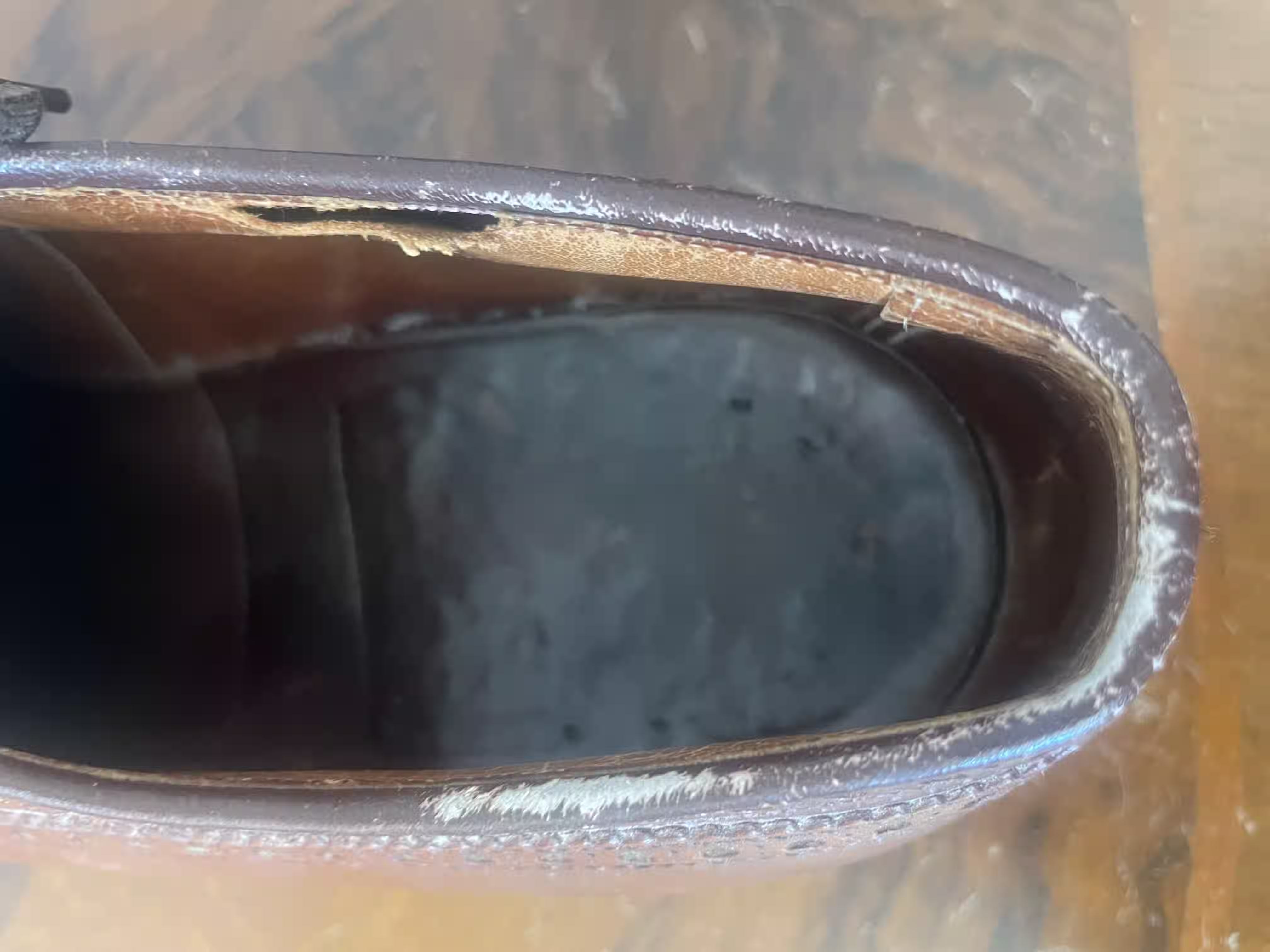
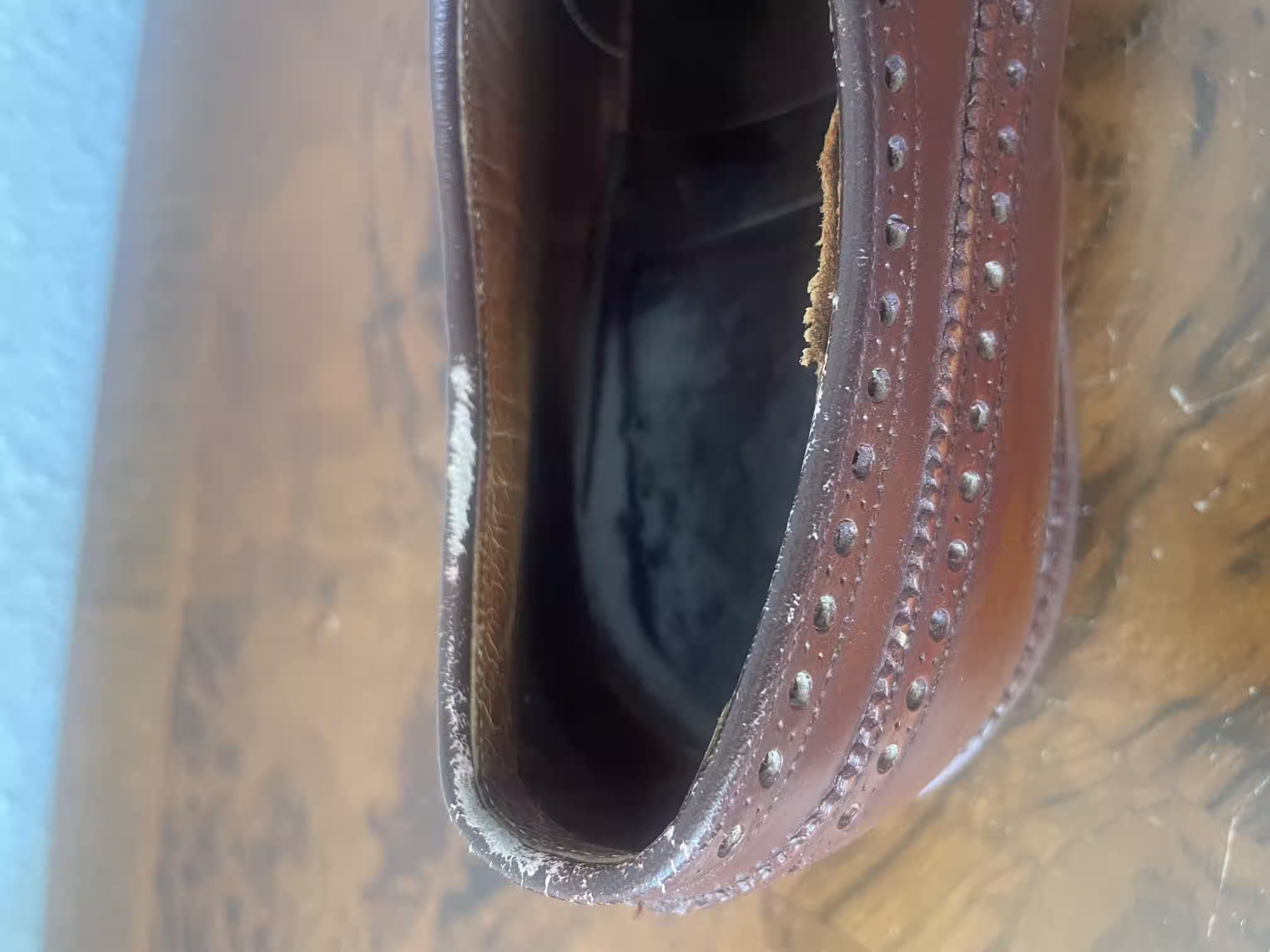
However, this doesn’t happen after just a few careless times putting your shoes on, but after a much longer period of neglecting your shoes without using a shoehorn. If you’re traveling and don’t have a travel shoehorn with you, you can also use your finger to help your foot slip into the shoe. It only becomes a problem if this turns into a habit.
What’s wrong with the finger version? - It doesn’t provide enough room for your foot to slip into the shoe without bumping into the shoe edges. It’s exactly these constant frictions that wear away the leather at the shoe edges and make your shoes look worn. A shoehorn, on the other hand, protects the heel area of the shoe edge and gives your foot more room to slip into the shoe.

Shoe trees: the standard remedy against creases
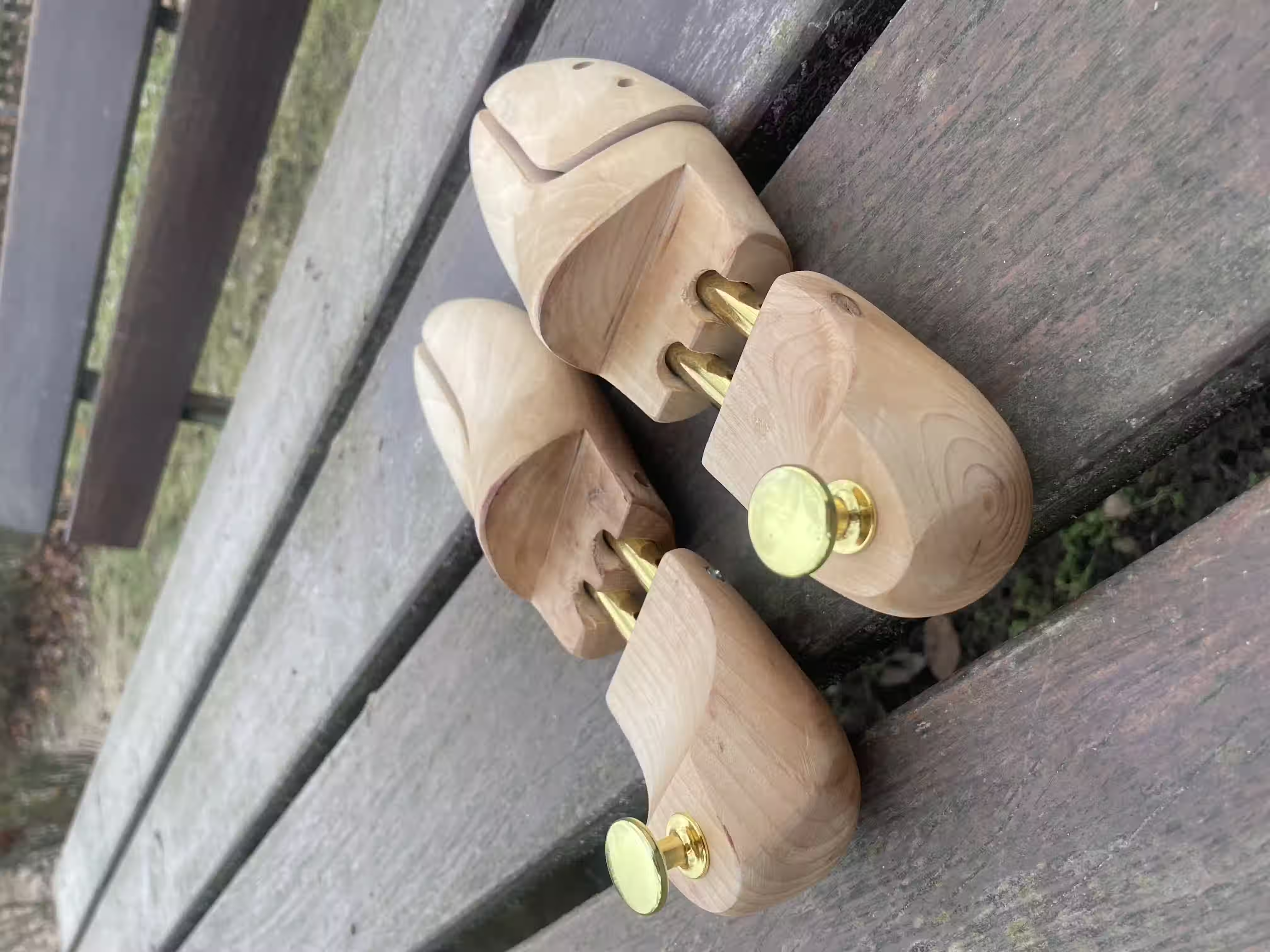
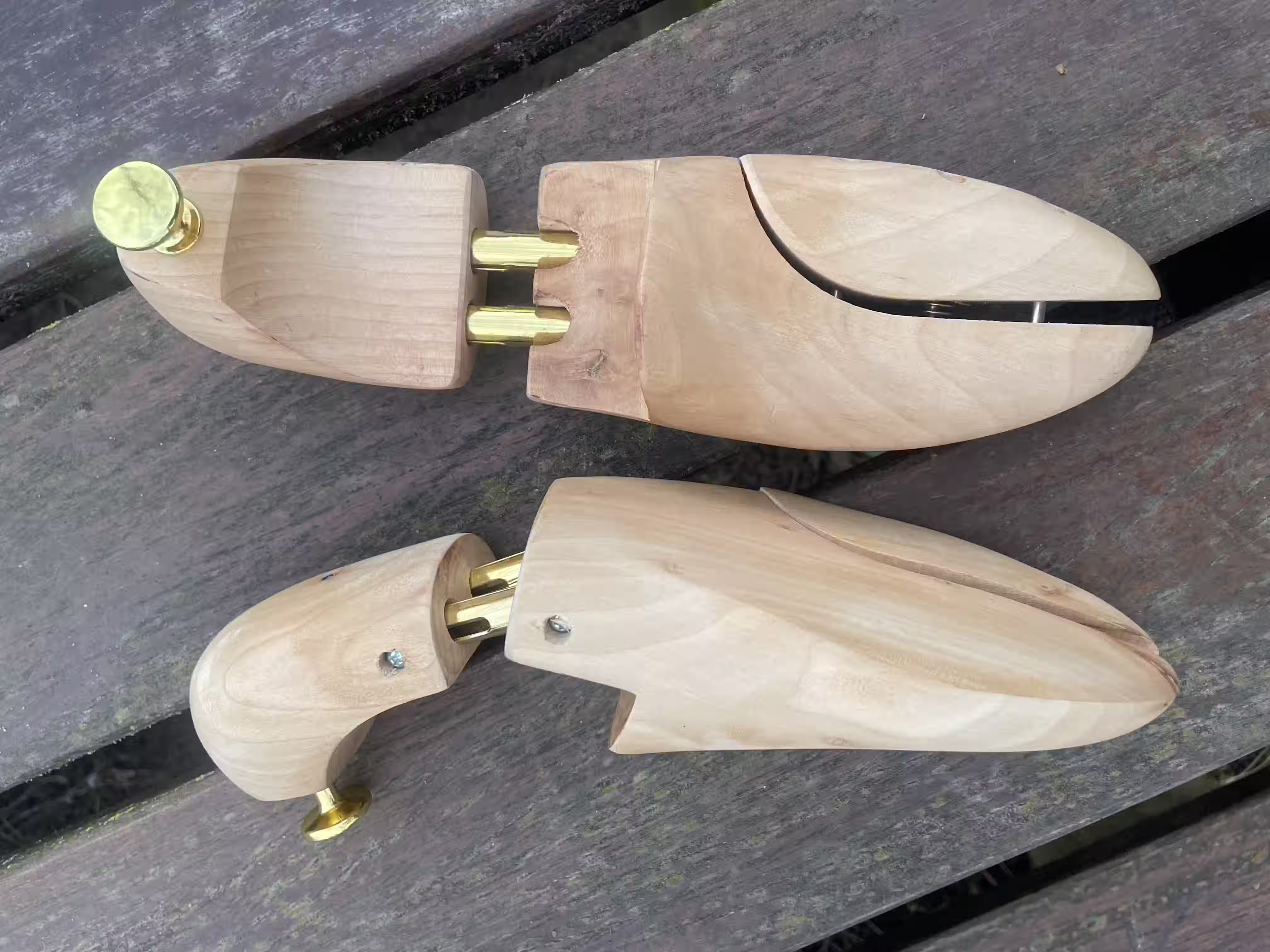
Shoe trees are an important aid for high-quality leather shoes to keep them in good condition for as long as possible . Above all, they are a means against creases, so that these can smooth out again during rest periods.
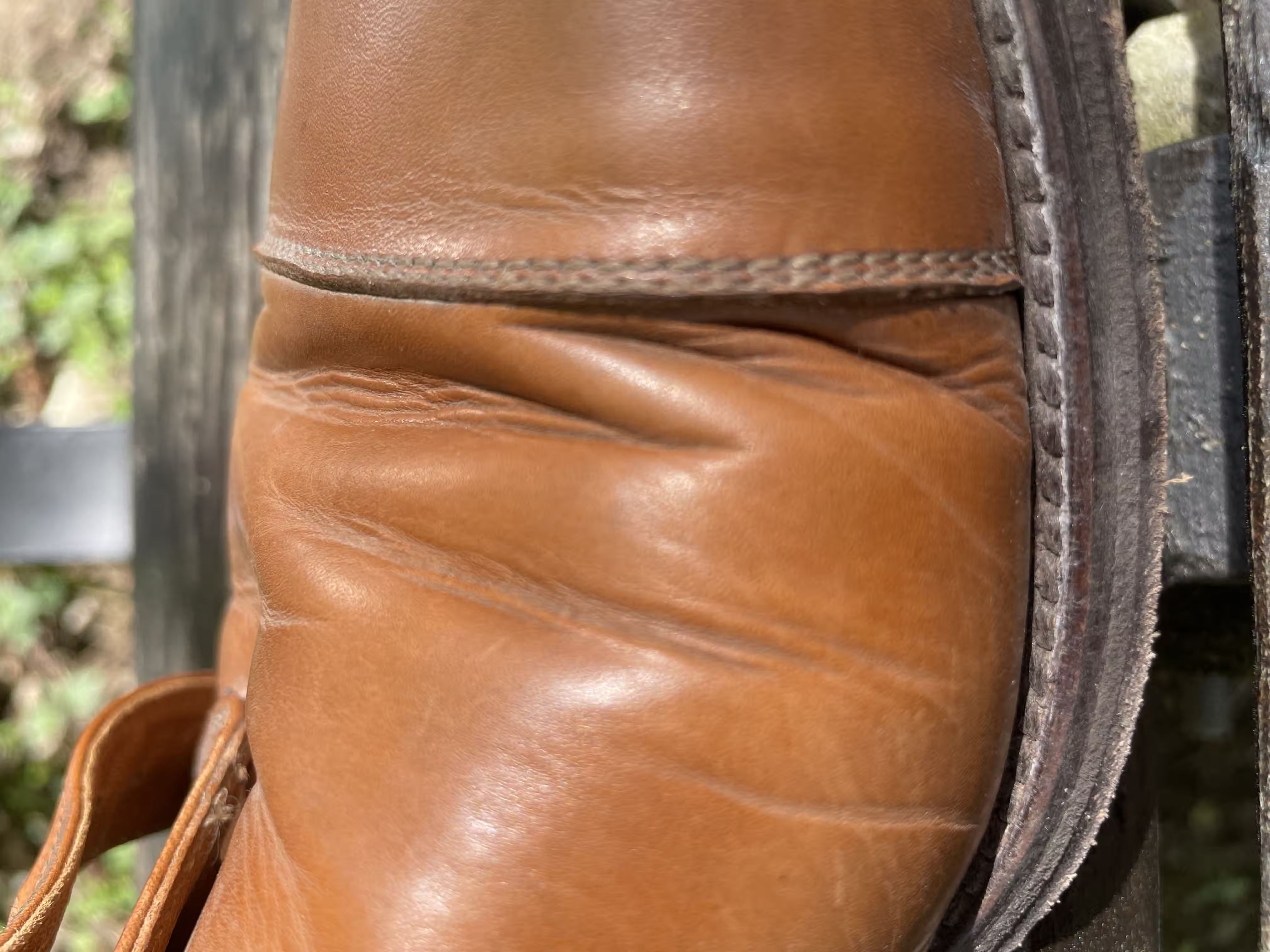
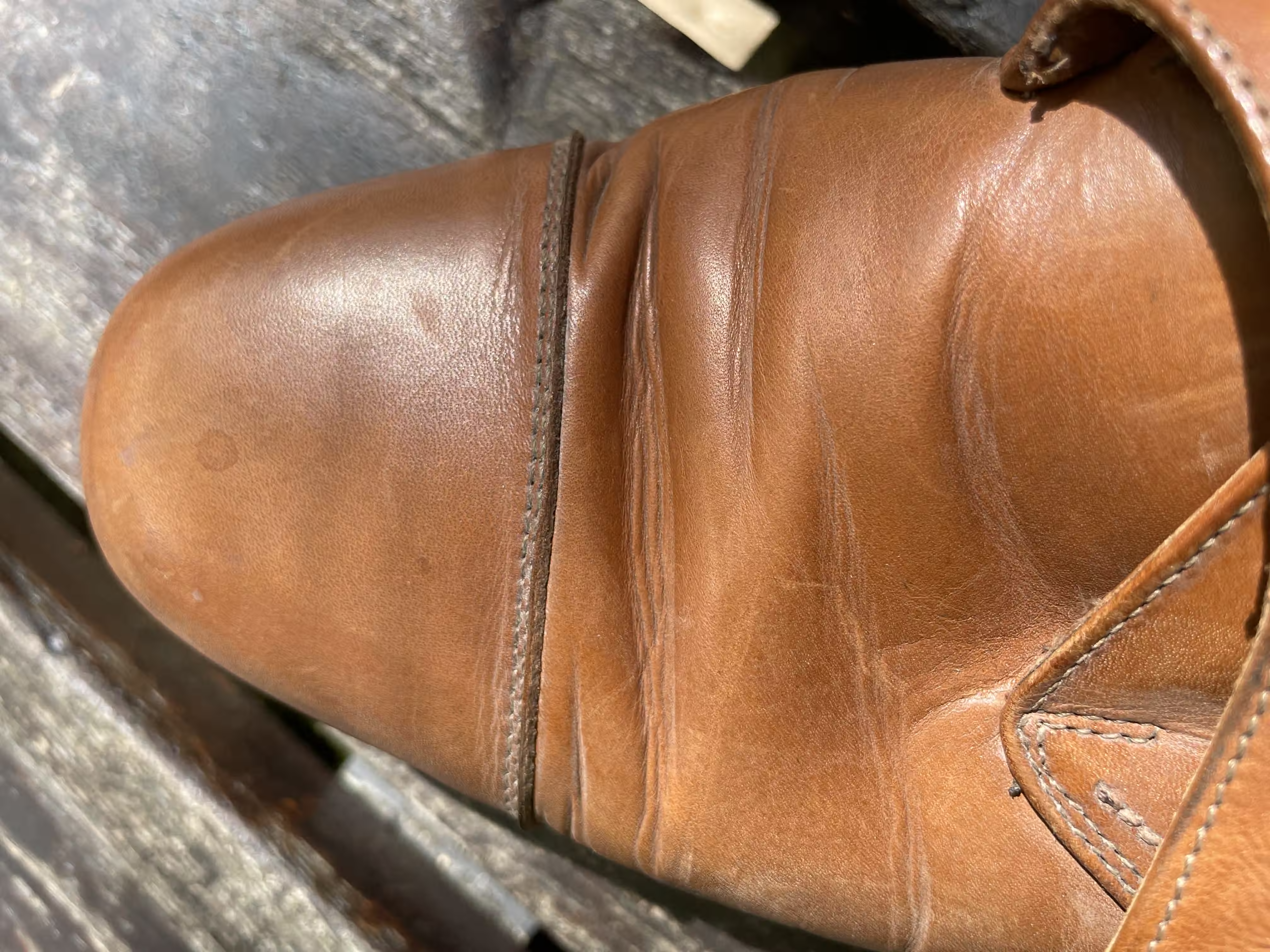
By the way, here you can see how pronounced creases can become if you completely do without shoe trees for a long period of time. That shows that creases shouldn’t be underestimated .
A shoe tree also brings the shoe overall fairly close to its original shape. If someone stepped on your empty shoe and flattened it - which I would wish on no one, especially with high-quality shoes - you can get it back into good shape with shoe trees.
Active shoe care: nourishing the leather
Depending on how often you wear them and on other influences your shoes are exposed to, you should treat your leather shoes with leather care products. For example, I have many shoes to choose from and usually pick out a selection for a season that I then keep ready at hand. That can be six to ten shoes, which I then wear comparatively often. Because of that number and my rotation, the shoes aren’t stressed as much as if I only had three pairs. Also, I usually don’t wear one pair of shoes all year round. Accordingly, it’s enough for me to care for a pair of shoes about once a year.
Depending on the intensity of use, six to eight weeks until the next care treatment can also make sense. Personally, though, I simply look at the shoes to judge them. I have a rough idea of when I last cared for them and whether I’ve worn them very often since then. With smooth leather shoes, I can especially form an opinion based on the condition of the upper leather: if the leather no longer looks so fresh and shows various signs of wear, then the shoe is a candidate for its next care treatment in my view. With suede shoes, the signs of wear seem more subtle to me.
Shoe care specifically for smooth leather shoes
With normal shoe care for smooth leather shoes, the upper leather is freed from dust, light dirt, and any wax residue so that the cream used afterward can be absorbed better. For heavier dirt or stubborn stains, more is needed, as well as for a thicker layer of wax - in such cases, it’s best to use special leather cleaners - as much as necessary and as gently as possible. But usually, a simple brushing is enough if the shoes are in good condition. Using leather cleaners is always a strain on the leather, which I want to avoid as much as possible.
Then the shoe cream is applied - with your fingers, with a cloth, or with an applicator brush. The applicator brush has its advantage in the area between the upper leather and the sole. You can’t reach deep enough with your fingers. In terms of amount, it’s best to use only a little shoe cream and make sure the leather doesn’t drown in the shoe cream, but can absorb it lightly.
The upper leather is then polished to a shine after about five minutes - with a horsehair brush or with your hand. If you want a stronger shine, you can apply a little wax afterward and polish the shoes to a shine again.
Special care for suede shoes
Even for suede, the first step is to brush off the coarse dirt. - But first, put in the shoe trees. You can then loosen the finer dirt from the suede with the help of a cleaning spray and then brush it off. Shiny spots can, for example, be carefully roughened up again with a metal brush. After that, the leather is ready to be treated with a nourishing care spray and then brushed off. Optionally, you can repeat this process at the end with a waterproofing spray to protect the shoes against dirt and other things.
Caring for the leather lining
In various guides, caring for the inside of a shoe isn’t even a topic. But why here? - Well, the leather lining gets compressed and stretched when you walk, so it is exposed to continuous movement. By supplying the leather lining with nutrients, we keep it nice and supple and elastic so the leather doesn’t crack or tear. The latter happens with dry leather, which is what we want to prevent. Another disadvantage of dry leather is that it quickly absorbs sweat. And sweat is alkaline and brings the leather into the corresponding alkaline range, which is not the ideal condition for leather. In addition, sweat has no nourishing effect on leather at all. So sweat continues to make the leather vulnerable to breakage.
By the way, you can recognize sweat by the dark spots inside the shoe. If you see them, it might be time to act: you can use a leather cleaner to remove the sweat crystals and other dirt. Much more important is then to care for the leather afterward with a leather cream.
A few side aspects of care
When caring for the upper leather: right at the beginning, I put the shoe trees into the shoes to have more counterpressure when brushing and rubbing and to have the leather in the right shape right away.
I usually remove the laces beforehand. That way I can reach all areas on the upper leather and in the inner lining better. For a small, quick refresh of the upper leather, however, I sometimes skip this step if I’m not going for comprehensive care.